Nyhed
Aalborg University Strengthens Its Commitment to Clean Water and Sustainable Water Management
Nyhed
Aalborg University Strengthens Its Commitment to Clean Water and Sustainable Water Management
Aalborg University Strengthens Its Commitment to Clean Water and Sustainable Water Management
Nyhed
Nyhed
Aalborg University maintains a comprehensive and responsible approach to wastewater management across its campuses in Aalborg, Esbjerg, and Copenhagen. Wastewater from each location is treated by local utilities—Aalborg Forsyning, DIN Forsyning, and Biofos A/S respectively—ensuring that discharged water meets environmental standards. Before wastewater leaves university grounds, AAU implements local pre-treatment measures such as oil and grease separators and acid neutralizers, which are regularly serviced by university staff and external partners to remove harmful substances.
To uphold water quality and protect ecosystems, wildlife, and human health, AAU conducts continuous wastewater planning, mapping, and sampling. These efforts ensure that discharges of chemicals and heavy metals remain within the legal limits set by environmental authorities. If thresholds are exceeded, immediate investigations are launched to identify and mitigate the source of pollution, restoring compliance with wastewater permits.
In 2024, AAU strengthened its environmental commitment by updating its water quality standards and discharge guidelines. The university carried out discharge measurements at 14 locations to verify that laboratory wastewater met regulatory thresholds for hazardous substances. This initiative led to new procedures, including enhanced monitoring systems, staff training, and revised operational routines that promote sustainable water use and responsible discharge practices. AAU has also introduced an annual control system for process wastewater, reinforcing accountability and long-term compliance.
After undergoing extensive treatment, the purified water is released into the sea, while the remaining sludge is repurposed for biogas production, industrial raw materials, and agricultural nutrients. This circular approach reflects AAU’s view of wastewater as a resource that supports the green transition, with several treatment plants operating as CO₂-neutral facilities.
Systematic monitoring and documented savings
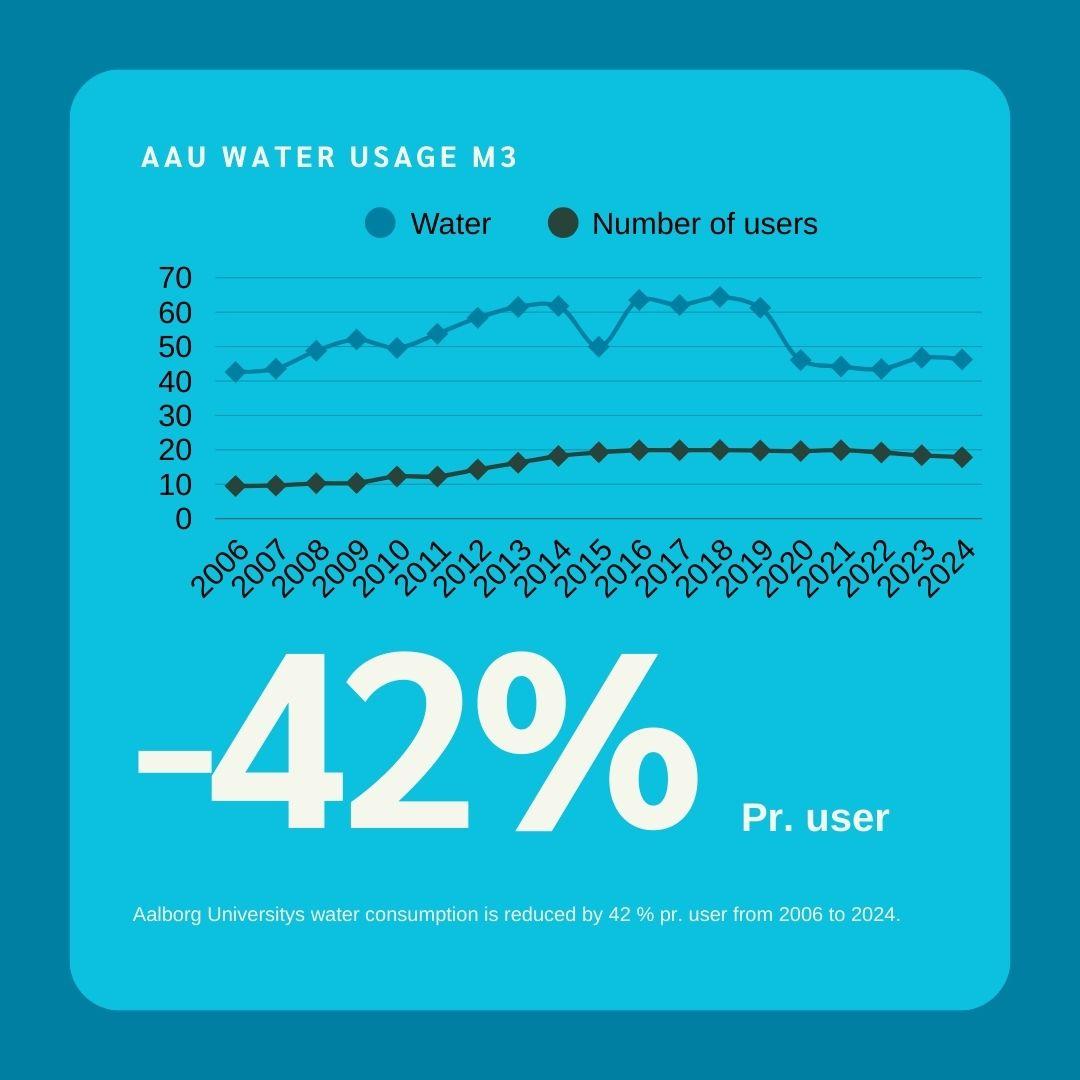
AAU has installed water meters across all campus locations, and water consumption is continuously monitored through a digital Energy Management System (EMS). The system tracks usage in real time and sends automatic alerts in case of leaks, enabling quick response and minimizing water waste.
Thanks to these efforts, water consumption per user has been reduced by 42% between 2006 and 2024. This corresponds to saving of millions of liters of water annually and demonstrates how technology and behavioral change can lead to real impact.
Water-Saving Installations and Sustainable Operations
The university has replaced toilets and faucets with water-efficient models, and cleaning methods with low water usage have been implemented. Additionally, collected rainwater is used for outdoor irrigation, reducing consumption of drinking water.
AAU also maintains a pesticide-free campus, protecting groundwater and supporting high water quality in the surrounding environment.
Water conscious building standards
The university has water conscious building standards that are integrated into both its operational practices and construction guidelines. These standards are part of AAU’s broader climate plan and sustainability strategy, and they align with Denmark’s Building Regulations BR18 § 404, which mandate that “there should be no unnecessary consumption of water and energy” .
Wastewater from teaching, office, and research buildings is directed through closed pipe systems to municipal treatment plants, where it undergoes mechanical, biological, and chemical purification. Rainwater from roofs and paved areas is collected in basins, where sedimentation removes pollutants such as oil, plastic, and sand before the water is safely released into nature.
These systems ensure that the university’s water discharge complies with environmental standards and helps protect local aquatic ecosystems.
Researching the future of water purification
AAU is actively engaged in research on innovative water purification methods, including technologies that remove pesticides from drinking water using UV light—without chemicals or direct contact with the water. These solutions have the potential to improve water quality both locally and globally.
Results: